

Nether Edge Art School visit and talk 16/05
The night before I gave this talk, I was lying in bed struggling to sleep. I couldn’t switch my head off. My mind was in overdrive and I was panicking. I’d not held an audience solo for an hour since I won The Title Art Prize in 2013 and I had to give a Q&A to an audience of approximately 100 people. I don’t remember feeling nervous or anxious at the time, but I was young, had little to no self awareness and seemed to be riding a wave of moderate success with my work. This time I somehow felt underprepared and incredibly self conscious. As it turned out, I had no reason to be! I know my stuff, and once I got into my stride I felt at ease and received a lot of good feedback from what was a very engaged audience of art enthusiasts.
I tried to make the talk as relevant and useful as I could. I covered a bit about my background as an artist (my BA at Falmouth, the different residencies I completed at both Marlborough College and Christ’s Hospital School, exhibiting widely, including at the Liverpool biennial in 2008, winning a national art prize, producing a body of work for a solo show at Blank Space Gallery in Manchester), and how I came into being a picture framer. However the talk was mostly concerned with talk of art conservation.
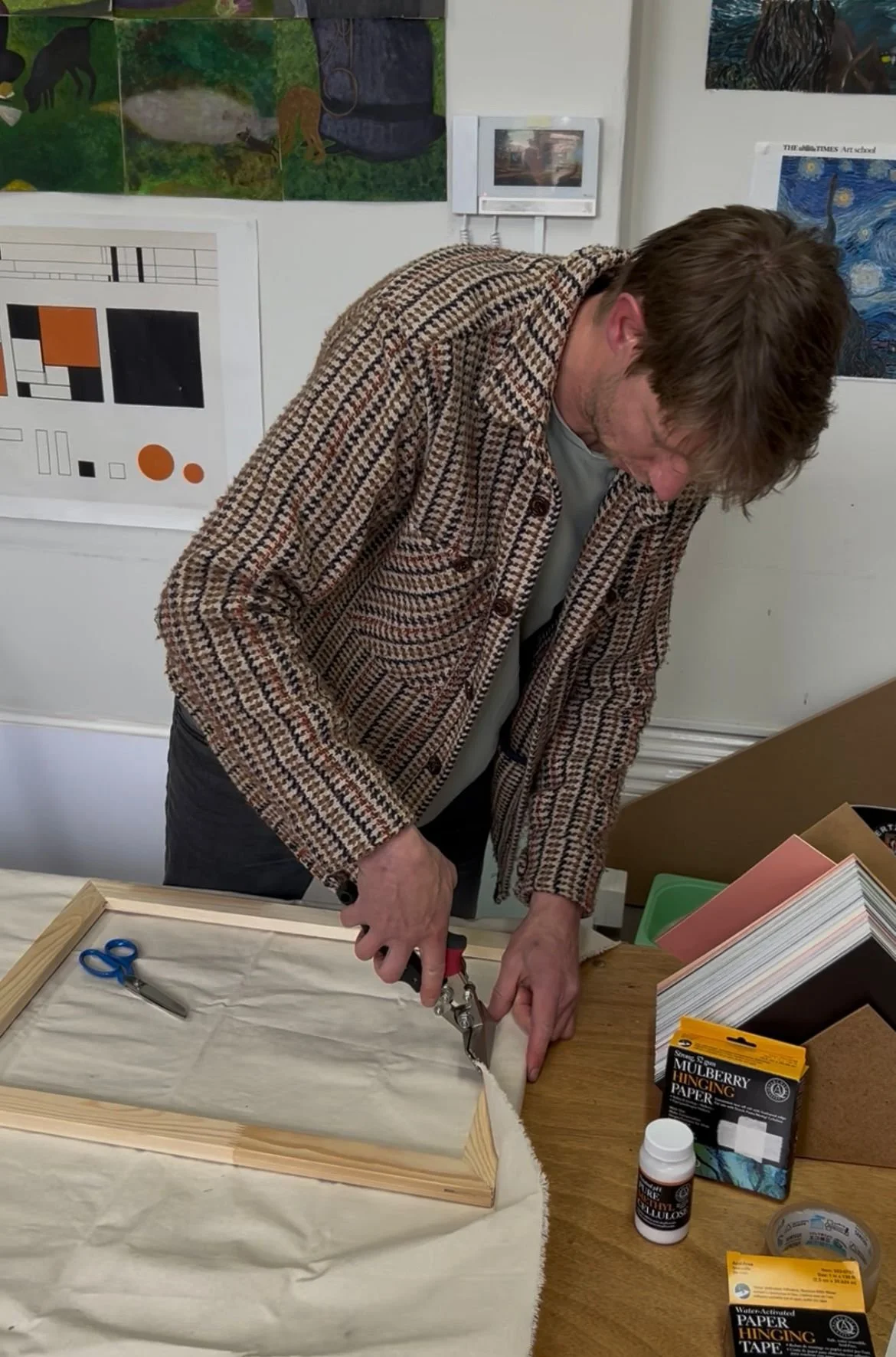
There were a few oil painters in the room, so I showed them how to stretch their own canvas. To me, it seems like such an obvious thing to do as an artist if you’re painting on canvas. There’s a number of reasons it’s worth doing yourself over shop bought options. Firstly you end up with a far superior product for a much better price tag. Secondly, you can customise your canvas size by combining lengths of bars together that aren’t standard. You also have free rein to decide what type of textile surface you want to paint on. Some are smooth, and others are more heavily textured. Cotton is the standard and most affordable. However options like linen or even jute and hessian provide options for further experimentation. Deciding on what primer to use and even whether to prime at all, can all lead to developing an artists painting style and open up their application and language with paint.
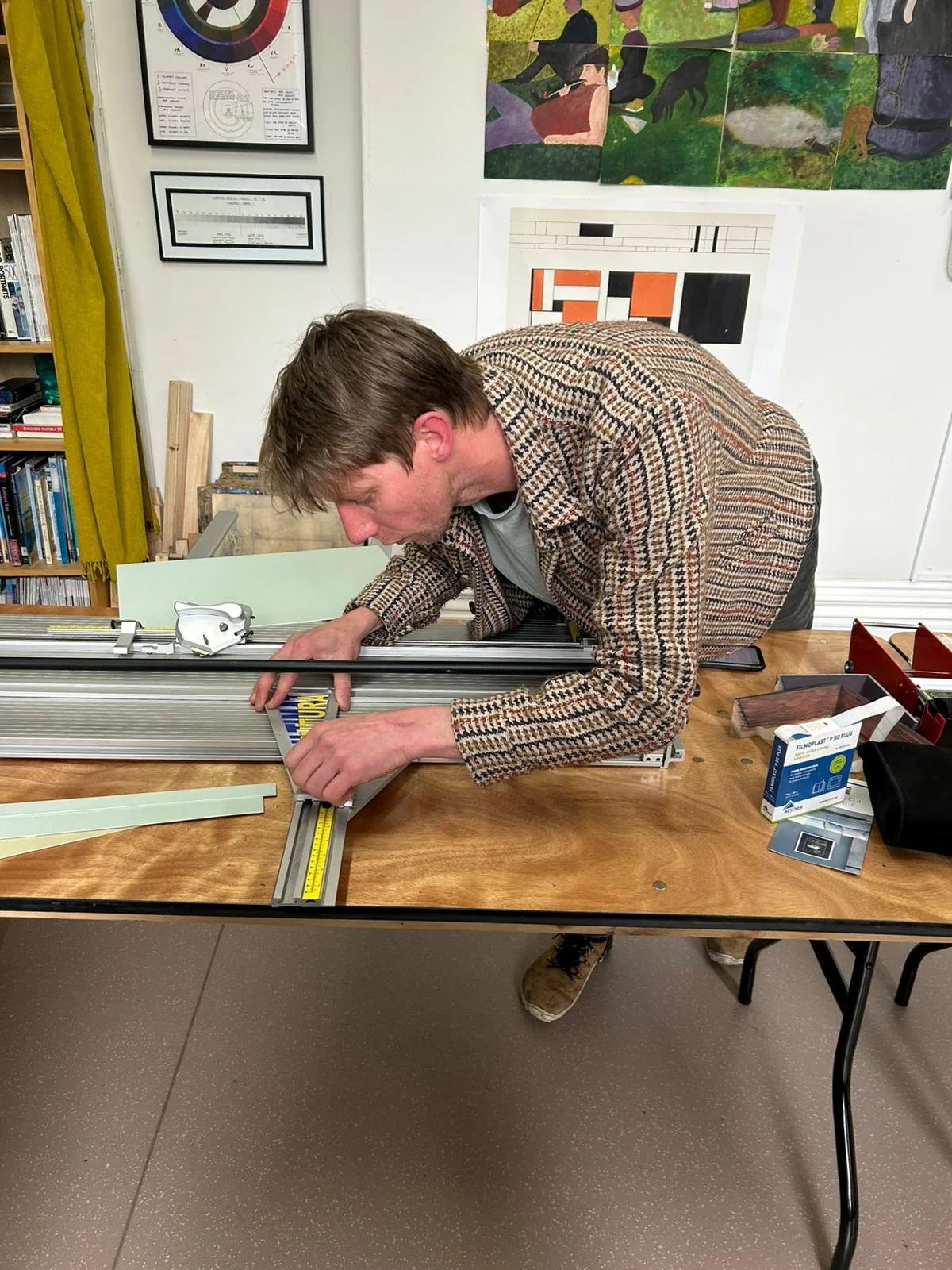
I gave a demonstration on cutting window mounts, and talked about the different Levels of mountboard available. Cutting your own window mounts particularly as a printmaker or photographer is one way of keeping cost down as an artist. Knowing how to do this and attach the work to an undermount using archival tape and the hinging method is crucial to selling a presentable item that will crucially be kept in optimum condition. More often than not, I see artists selling prints that are taped straight to the back of the window mount, on all 4 sides of the paper using self adhesive tapes. Why is this a problem I hear you say? Firstly, self adhesive tapes dry out and fail over time, as well as containing chemicals that are detrimental to the work. Secondly, paper is not stable. It expands and contracts as it absorbs and releases moisture from the surrounding environment. If the paper is constrained all the way around, the paper will buckle and warp. Lastly, a work mounted without an undermount will be in direct contact with the backing board, which generally contain nasties that will cause acid leach.
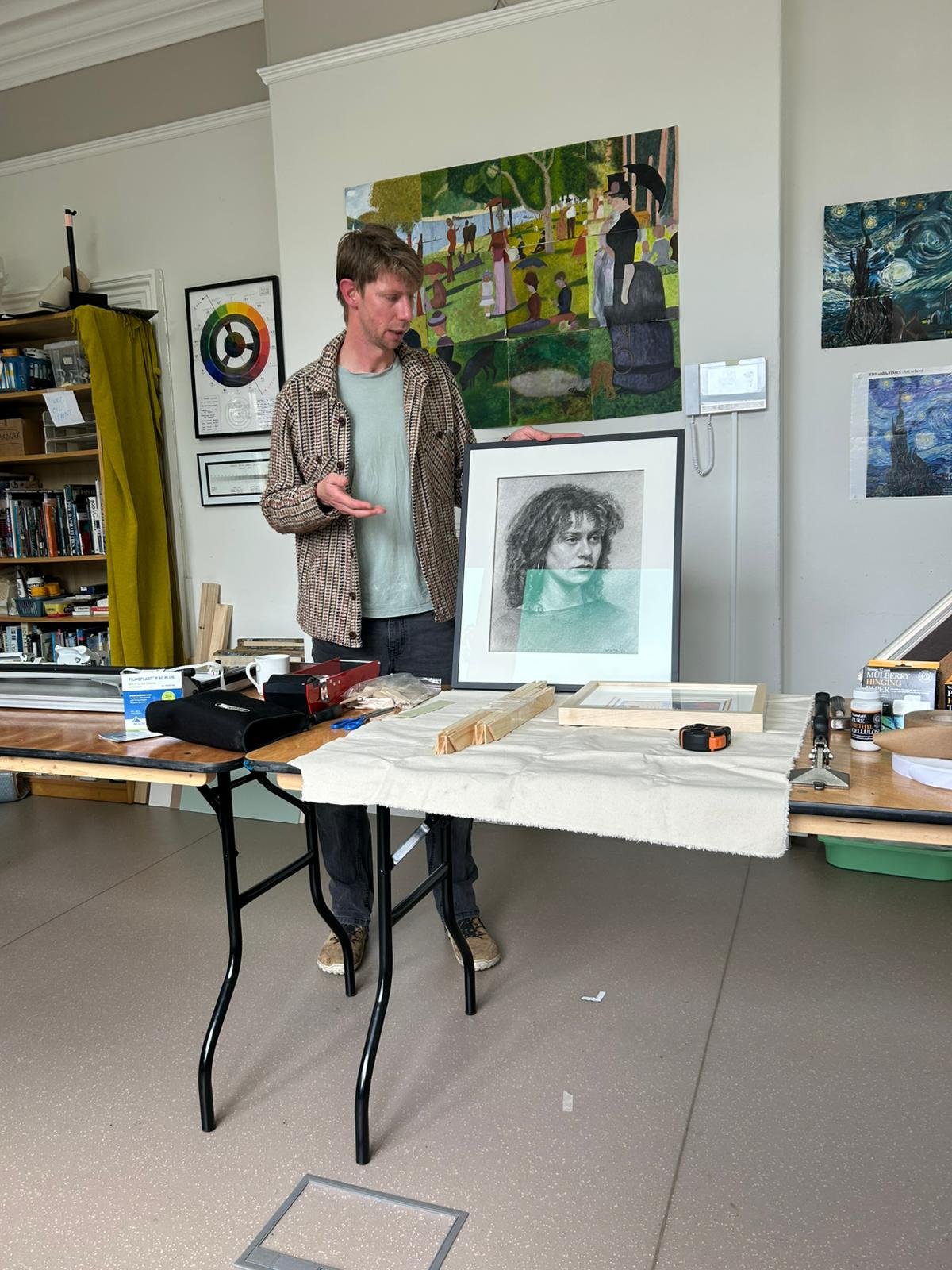
All in all we covered quite a lot of ground in an hour. It was great to share some of my knowledge of conservation and fine art framing practices with an audience of artists who took a lot from it. I’m always keen to inspire inform and educate, so if you’d like to host me for a talk about all things framing, don’t hesitate to get in touch!